 H T Mould China Limited
H T Mould China Limited
H T Mould China Limited
As brands demand better decoration, higher output, and recyclable packaging, in-mold labeling (IML) has become a core process for injection-molded packs. From roughly 2010–2015, IML matured first in automotive, medical, and personal care—one-piece label and container, durable graphics, and recyclability won fast adoption. From 2016 onward, thin-wall molding widened IML into bubble tea cups, yogurt cups, food trays, and household packaging, pushing lines toward speed, automation, and smarter controls.
H T Mould draws on years of thin-wall mold and production experience to develop and integrate automation. Beyond high-performance molds, we combine IML labelers, take-out robots, and end-of-line packaging into one accountable solution—so you are not juggling a mold shop and multiple equipment vendors or arguing over interface specs and warranty boundaries. Tell us the product and pack format; we engineer mold through automation and stand behind long-term stable operation with unified service.
Side-entry IML is widely used for deep, thin-wall parts such as yogurt cups, bubble tea cups, and coffee cups. Mounted on the fixed-platen side of the press, servos insert die-cut labels into the cavity in fractions of a second; electrostatic or vacuum holding fixes the label to the cavity wall. After fill and pack-out, the label is permanently bonded to the part.
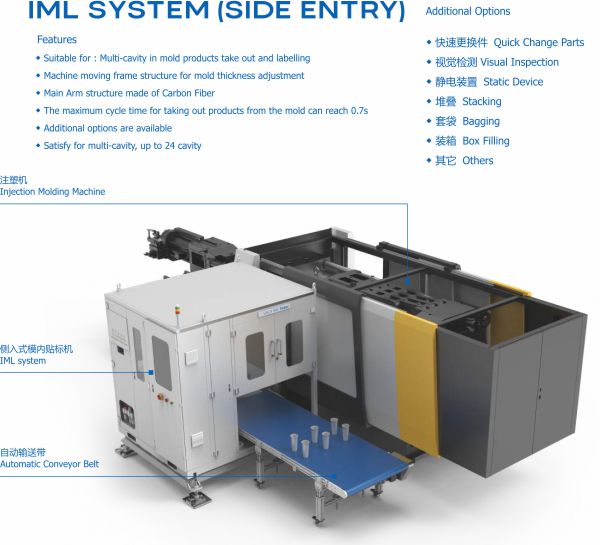
Key strengths of our side-entry IML system:
Typical pairing: 150–700 t presses for food packaging, beverage cups, and dairy containers.
Shallow cavities and special shapes—caps, shallow trays, square tubs—often suit top-entry or angled label feed. The module mounts above the machine; labels drop or angle into the mold, accommodating complex cavity layouts and high cavitation.
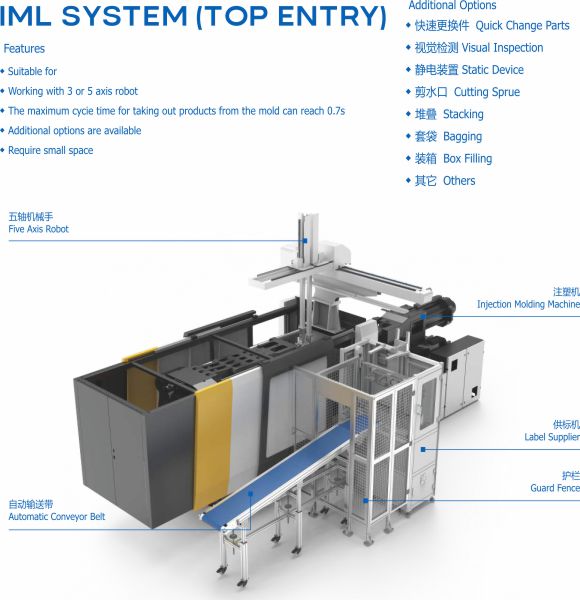
Top-entry strengths:
Ideal for meal boxes, fruit trays, cosmetic closures, and similar parts where speed and appearance both matter.
IML is not only about labeling—parts must exit the mold quickly and cleanly. Our side-entry robots pair with side-feed IML and multi-cavity thin-wall tools, mounting on the operator or non-operator side, entering the mold after opening, lifting stacks of parts with vacuum, and placing them on conveyors or stackers.
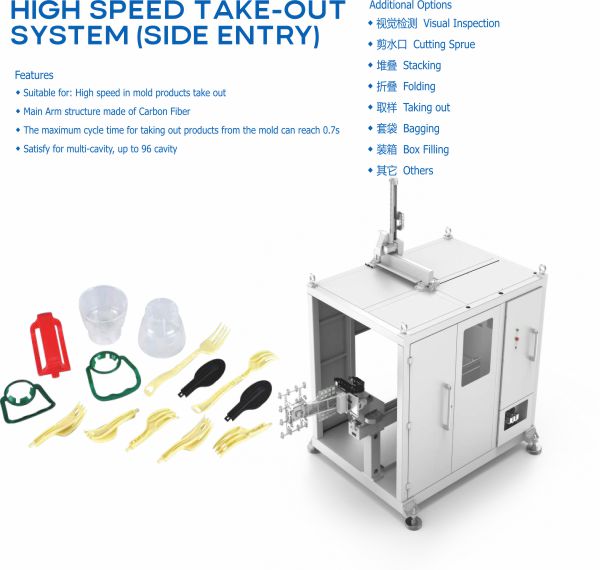
Key features:
The robot shares controls and HMI with our side-entry labeler for simpler training and faster setups.
For top-feed IML or tightly grouped cavities, top-entry robots mount on the stationary platen or a gantry, descend into the mold, lift parts, and transfer them to downstream handling.
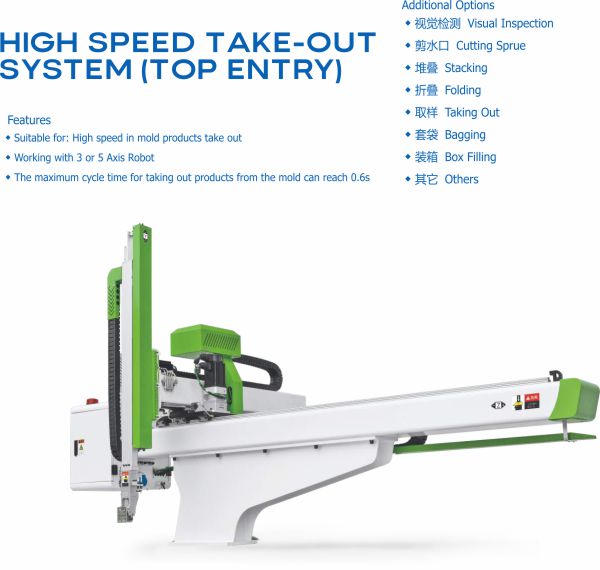
Benefits:
Well suited to large thin-wall containers, multi-cavity shallow trays, and lines feeding automatic packers.
Packing is often the last labor bottleneck. H T Mould extends the line with tailored automatic packers for near hands-off operation from injection to shippable goods.
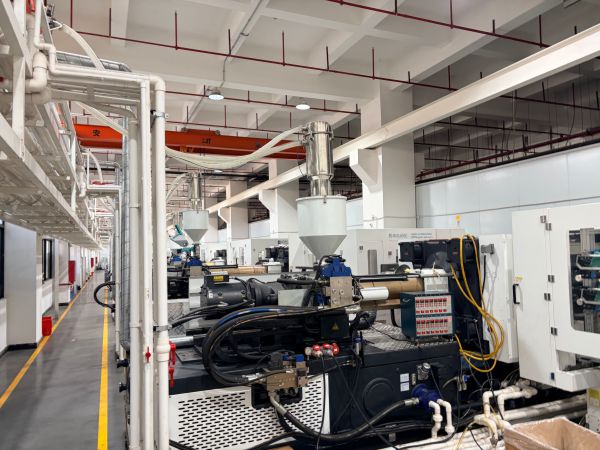
Click the image to watch the video on YouTube
Typical modules we integrate:
Packaging shares a unified control philosophy with molding, IML, and robots—including SCADA-friendly monitoring of throughput, alarms, and efficiency.
From molds alone to IML, robots, and automatic packing, our mission is to make high-output production straightforward. Dozens of food, personal care, and medical packaging customers already run H T Mould IML lines for better decoration, lower labor, and repeatable quality.
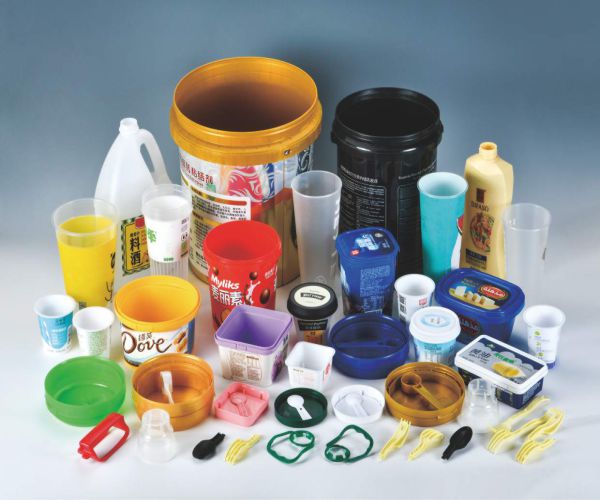
If you need a dependable, truly integrated IML and automated packaging system, contact H T Mould. We will tailor the line to your product, plant layout, and production targets.
H T Mould: from mold to finished packaging, delivering quality and efficiency in one stop.
*Images are representative. Equipment is built to each customer's specifications.